The earliest documented Tarot traditions emerged in northern Italy during the fifteenth century. Early packs combined familiar suit cards with additional illustrated triumph cards and circulated within courtly and elite gaming culture. The historical record is incomplete, but surviving cards and written references place documented origins in Renaissance Europe.
The Chronicle of the Cards
The History of Tarot
Tarot began as a European card game and gradually became a layered symbolic system used for play, art, divination, spiritual reflection, creativity, and personal exploration. Its history is not one straight path, but a sequence of reinventions shaped by artists, writers, collectors, occultists, readers, and changing cultural beliefs.
Begin the JourneyThe Beginning
Origins in Renaissance Europe
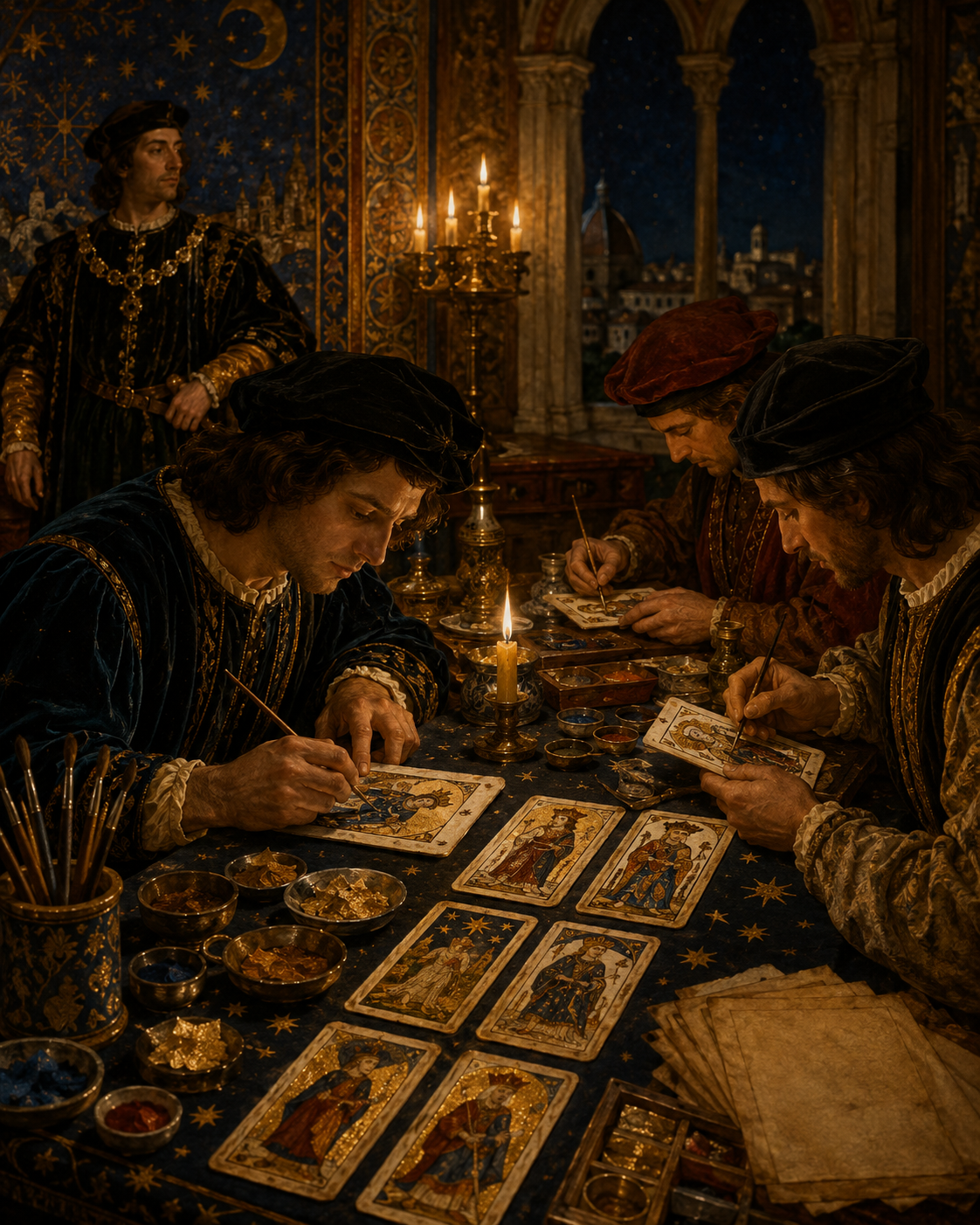
The earliest documented Tarot traditions emerged in fifteenth-century northern Italy. Known first as trionfi and later as tarocchi, the packs joined familiar suit cards with painted triumph cards and circulated as games within elite and courtly culture.
Surviving luxury decks were hand-painted and gilded in centers including Milan, Ferrara, and Bologna. Tarot’s occult and fortune-telling associations developed centuries later, as writers and readers reinterpreted the cards through new divinatory, philosophical, and esoteric frameworks.
Tarot began as a European card game—not as an occult or divinatory system.
Tarot Through the Ages
Tarot’s meaning changed as it moved through courts, print culture, occult philosophy, artistic reinvention, and modern global practice.
15th Century
The Birth of Tarot
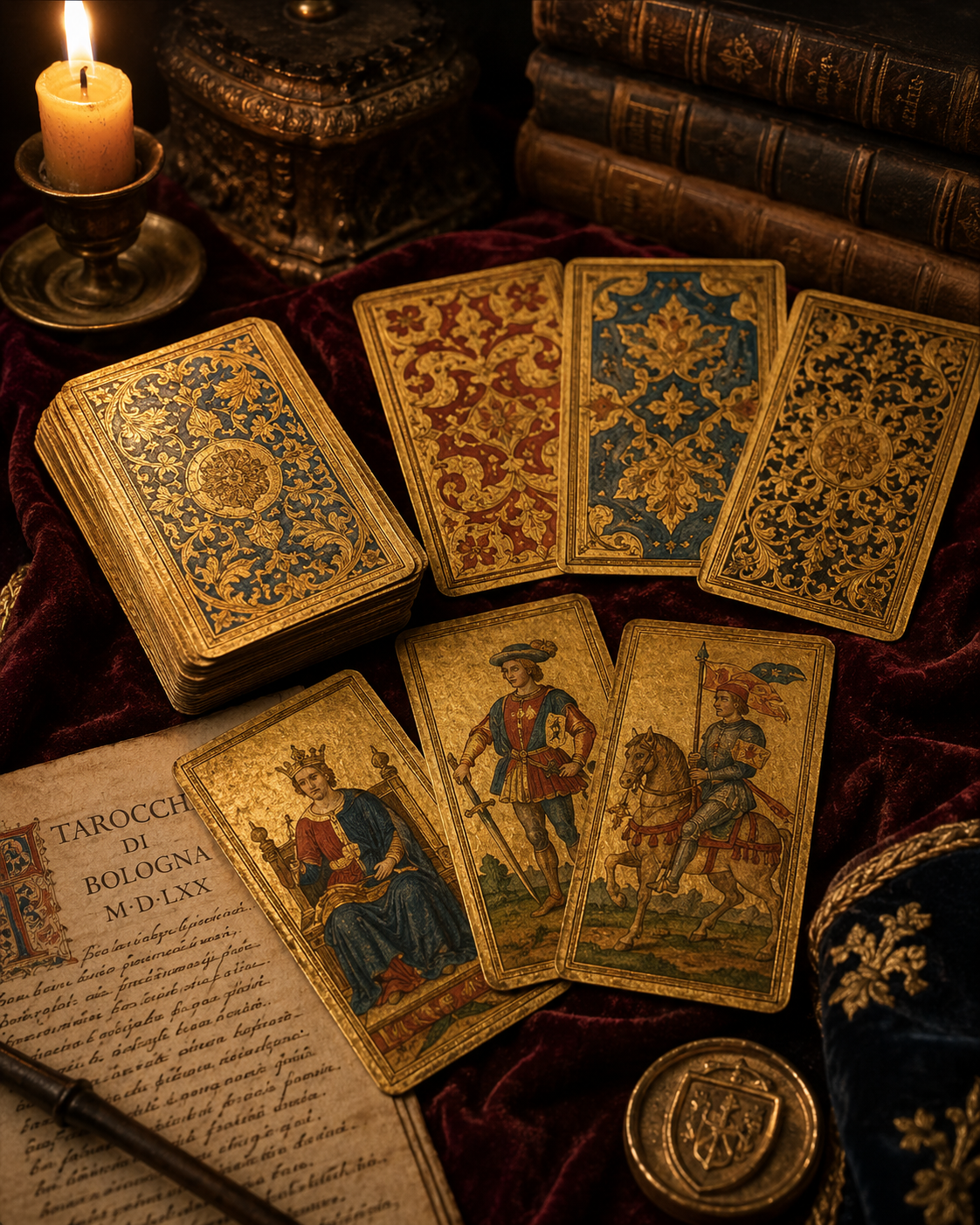
Luxury card packs appeared in northern Italy as games for courtly and aristocratic circles. Their painted trump cards joined familiar suit cards to create an elaborate new form of play.
Why This Era Matters
These early decks established the combination of familiar suit cards and illustrated trump cards that later Tarot traditions inherited.
From the Archive
Some of the earliest surviving Tarot cards were individually painted for wealthy Italian families, making them objects of art and status as well as instruments of play.
Related Link
Explore the earliest surviving Tarot traditions17th–18th Century
Mysticism Emerges
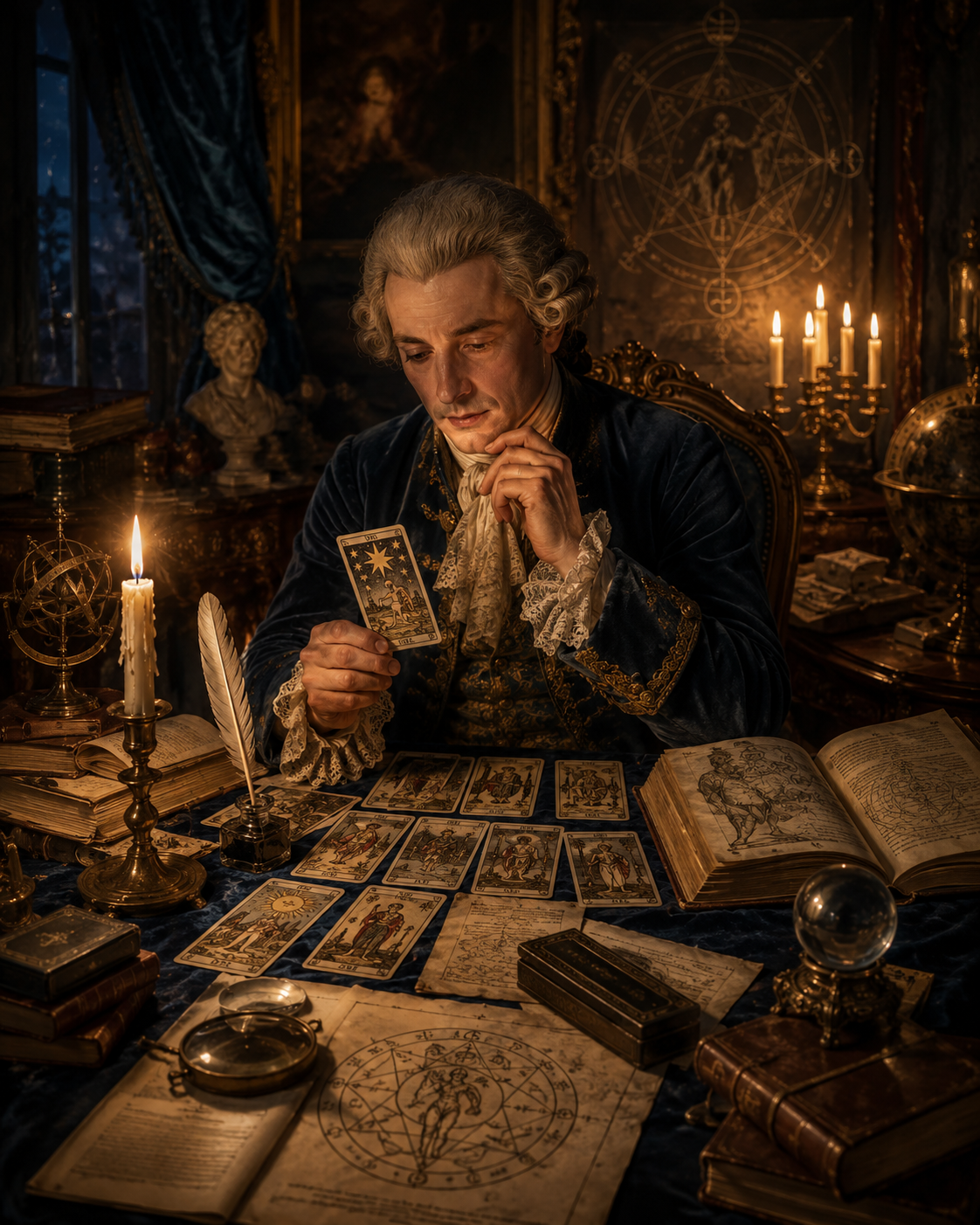
Writers and antiquarians began attaching speculative ancient histories and symbolic systems to Tarot. Many of these claims were influential even when they were not historically supported.
Why This Era Matters
During this period, Tarot began shifting from a courtly card game into a symbolic system associated with hidden history, philosophy, and spiritual interpretation.
From the Archive
Many claims connecting Tarot to ancient Egypt appeared centuries after the earliest documented decks and were not supported by the surviving historical record.
Related Link
Discover how Tarot became connected to occultism19th Century
The Occult Awakening
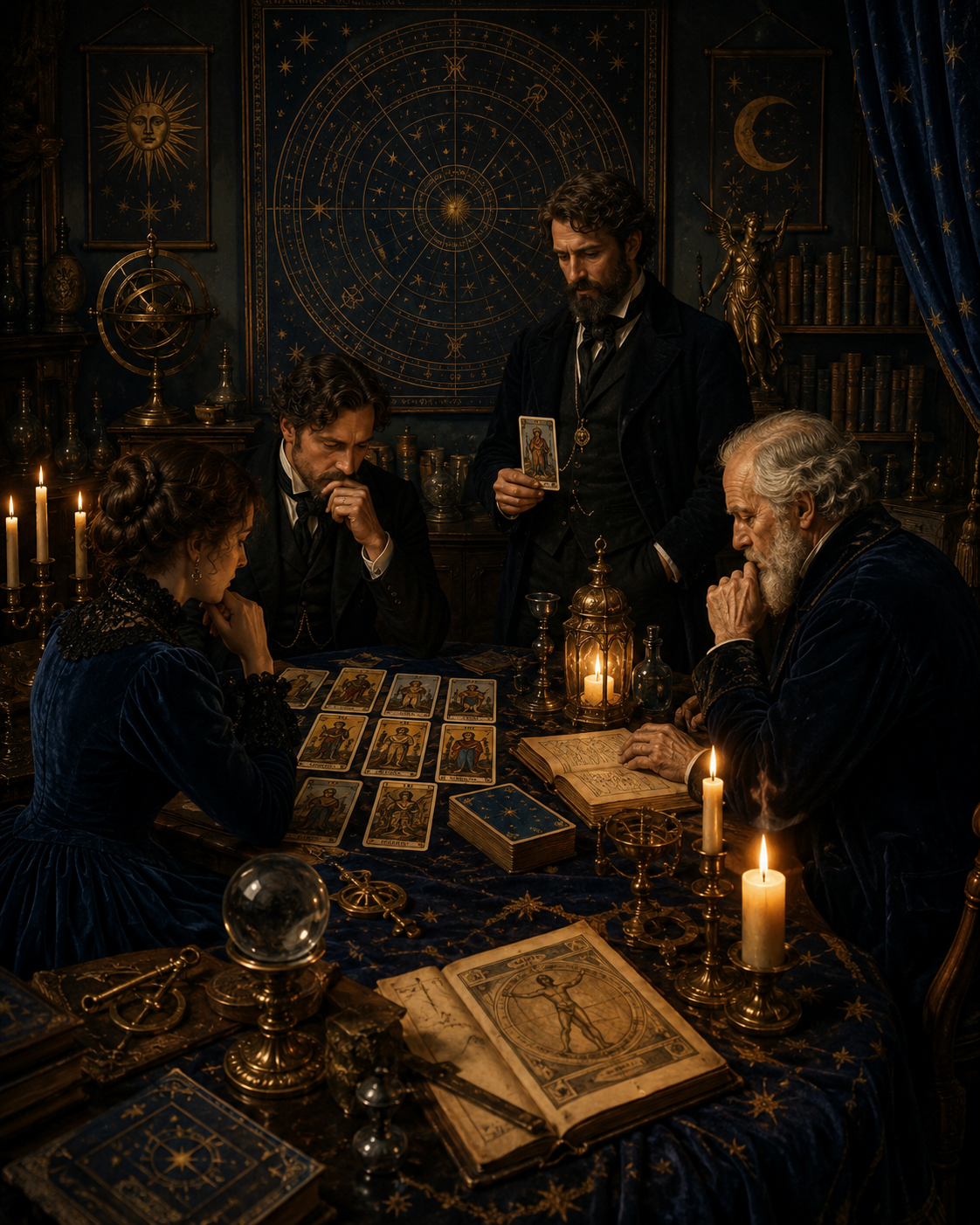
French and British occult movements connected Tarot with ceremonial magic, astrology, Kabbalah, Hermetic philosophy, and systems of correspondence.
Why This Era Matters
Occult writers transformed Tarot into an organized symbolic language by linking cards with astrology, ceremonial magic, numerology, and esoteric philosophy.
From the Archive
Nineteenth-century occultists did not merely interpret older decks. They created new systems of correspondence that continue to influence modern Tarot readings.
Related Link
Explore the symbolism of the Major ArcanaEarly 20th Century
Modern Foundations
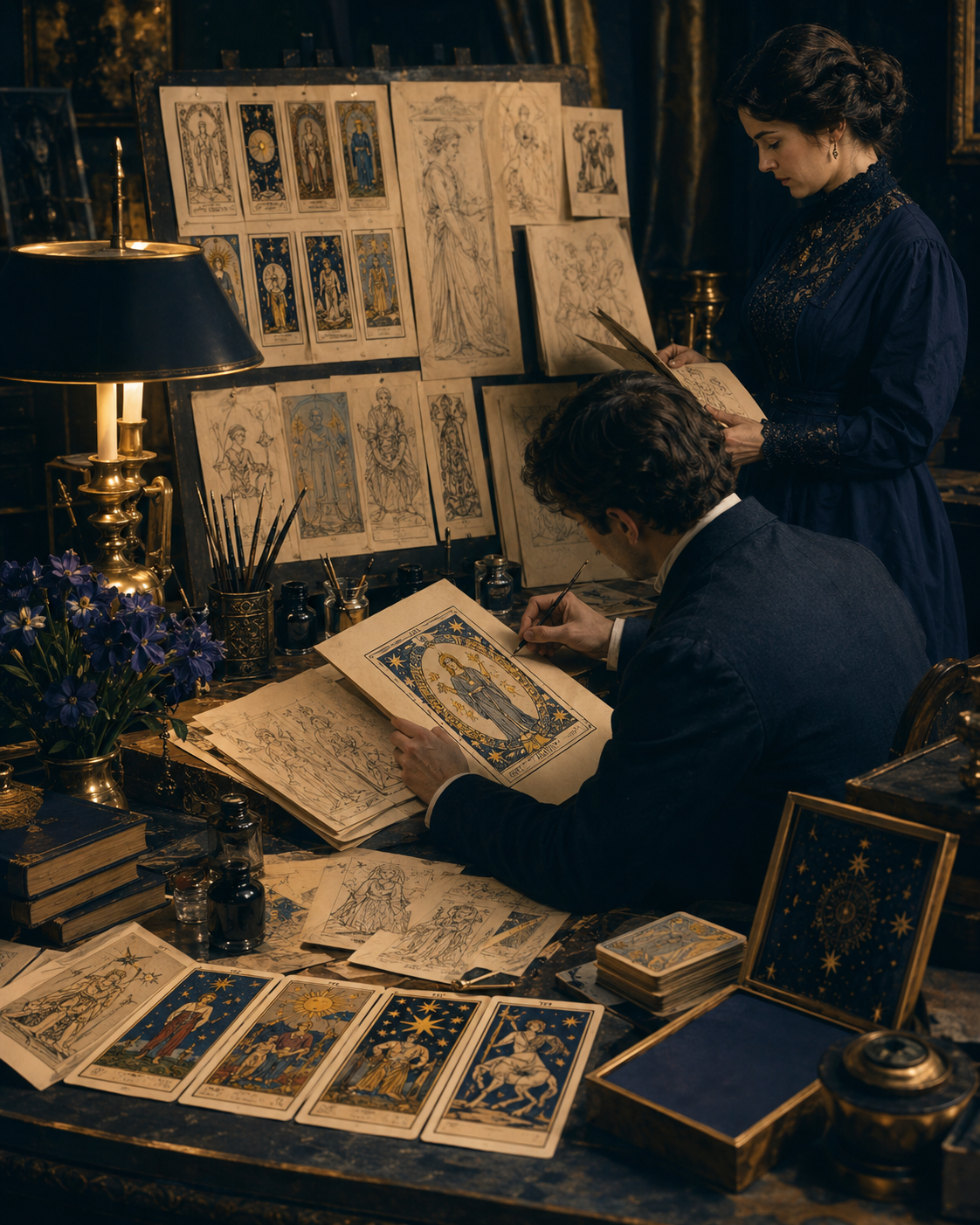
Fully illustrated minor cards and new symbolic frameworks made Tarot easier to read as a complete visual narrative, shaping many modern traditions.
Why This Era Matters
Fully illustrated minor cards allowed readers to interpret scenes and stories rather than relying only on suit and number associations.
From the Archive
The Rider-Waite-Smith deck, first published in the early twentieth century, helped establish much of the visual language now recognized in modern Tarot.
Related Link
Explore the Rider-Waite-Smith Tarot traditionToday
A Global Language
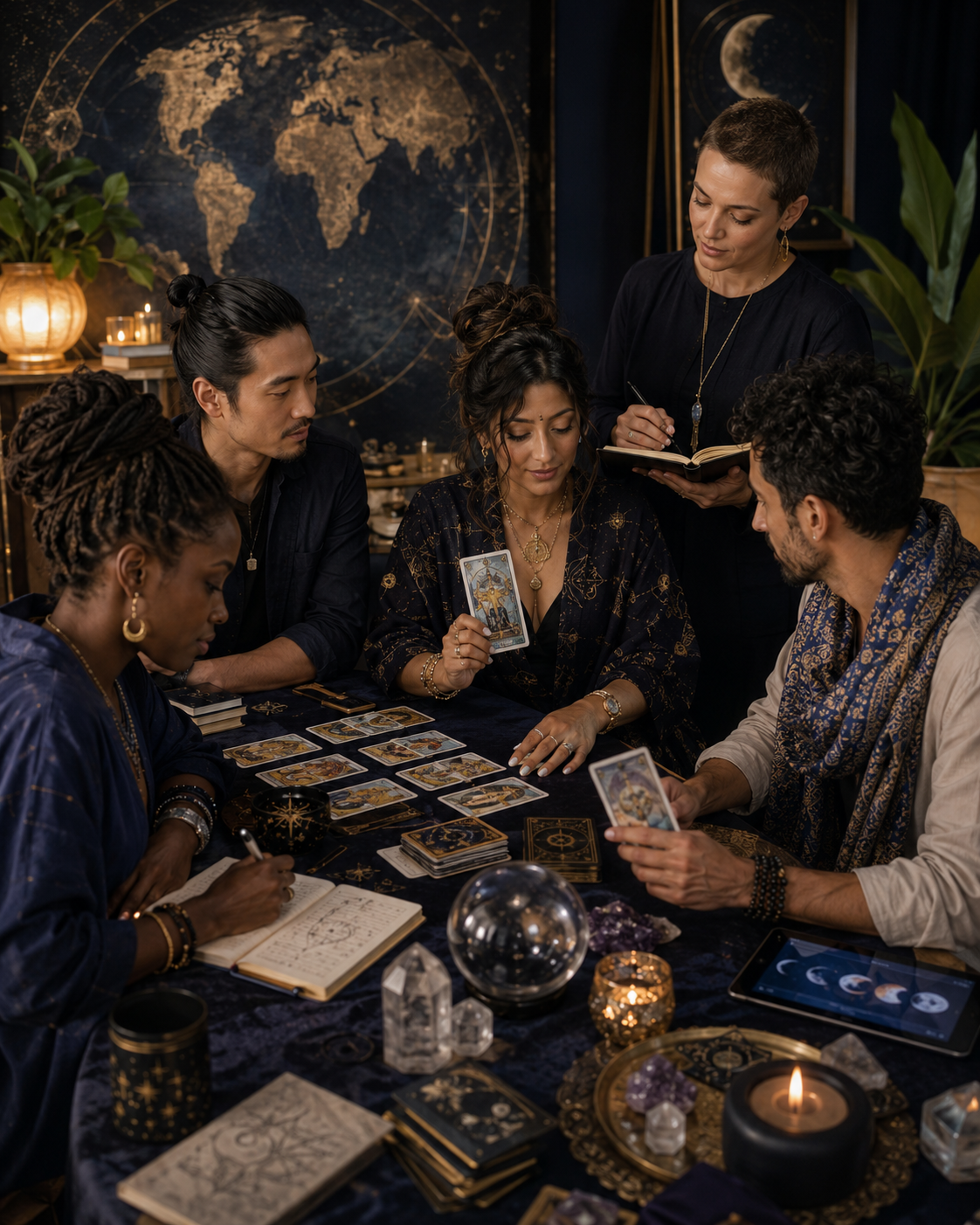
Tarot now appears in art, games, spiritual practice, psychological reflection, digital communities, education, publishing, and personal creativity worldwide.
Why This Era Matters
Modern Tarot has expanded beyond divination into personal reflection, creative practice, education, storytelling, psychology, and digital culture.
From the Archive
Contemporary decks frequently reinterpret traditional archetypes through new artistic styles, cultures, identities, philosophies, and fictional worlds.
Related Link
Explore Tarot card meanings1 of 5 — 15th Century: The Birth of Tarot
The Visual Lineage
Influential Deck Traditions
Tarot’s visual language has never been fixed. These editorial reconstructions evoke four broad traditions that shaped how later artists and readers approached the cards.
1 of 4
15th Century
Early Italian Tarocchi
Luxury hand-painted decks created in fifteenth-century northern Italy joined familiar suit cards with additional triumph cards. Made for courtly play, surviving examples also preserve the work of painters, gilders, and elite patrons.
Visual Signature
Individually painted figures, luminous gilding, heraldic details, and courtly dress give surviving cards the character of small luxury artworks.
Historical Influence
These packs established the enduring structure of suit cards plus illustrated trumps that later Tarot traditions inherited.
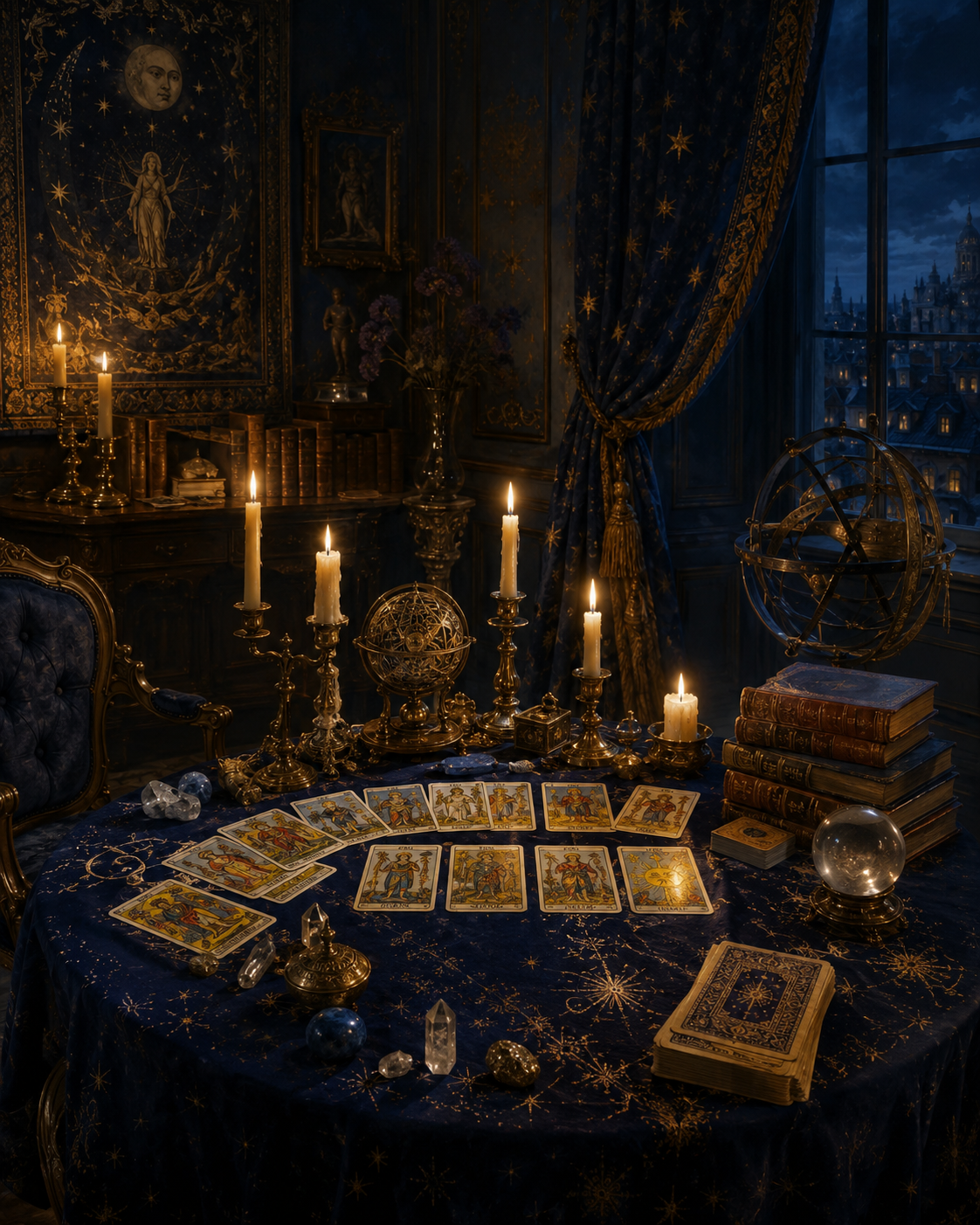
2 of 4
17th–18th Centuries
Tarot de Marseille
Printed packs circulating in France and neighboring regions established a durable visual vocabulary for Tarot. Their repeatable designs carried recognizable trump and pip arrangements beyond the world of one-off luxury decks.
Visual Signature
Bold outlines, flat areas of limited color, repeating pip arrangements, and consistent trump compositions make the system immediately recognizable.
Historical Influence
Its standardized sequence and imagery became a reference point for later continental decks, historical study, and modern revivals.
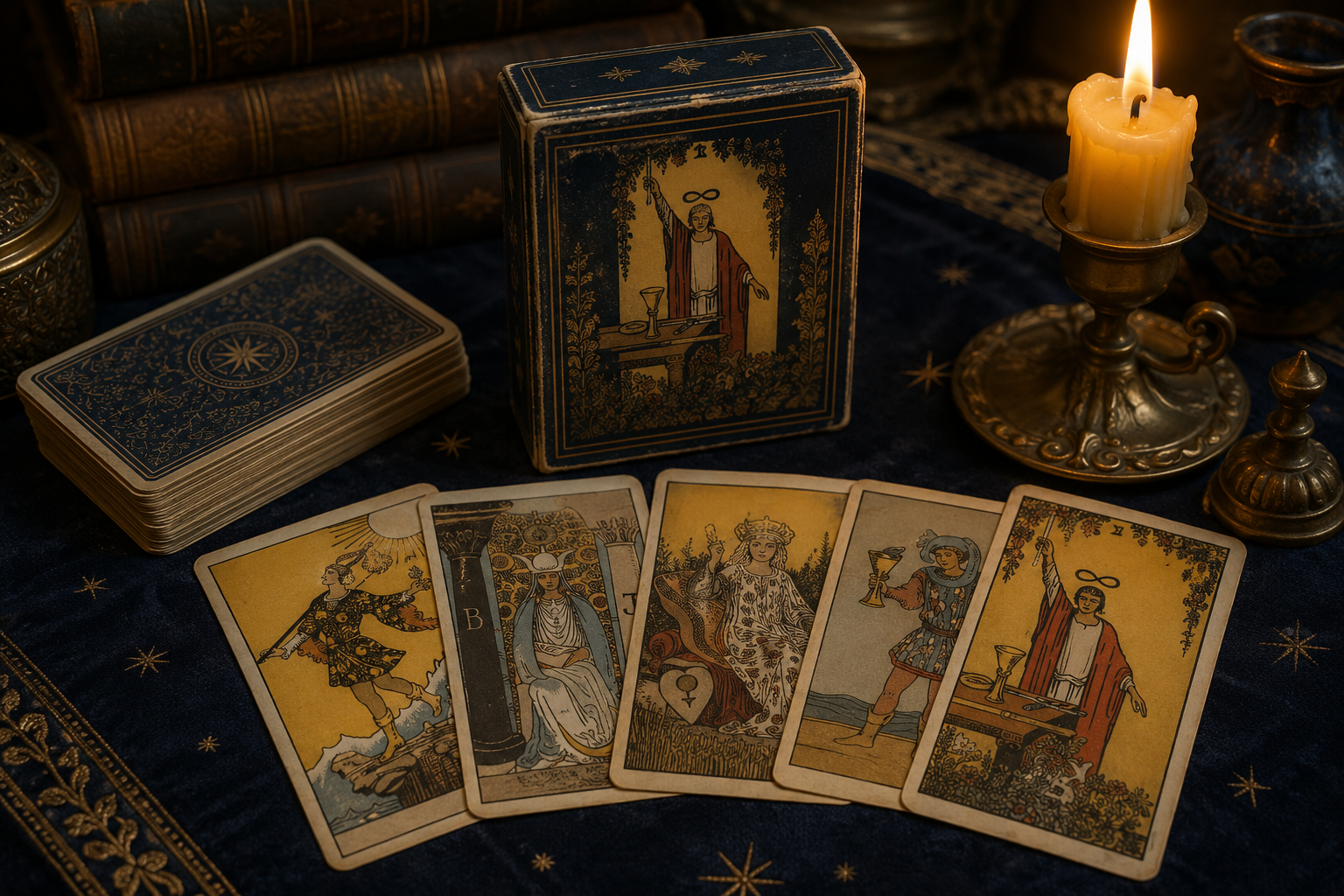
3 of 4
Early 20th Century
Early Illustrated Modern Tarot
Early twentieth-century artists extended narrative scenes across the minor cards rather than relying chiefly on repeated suit symbols. The complete deck could now communicate situations, gestures, and emotional relationships through pictures.
Visual Signature
Staged figures, expressive gestures, symbolic landscapes, and recurring motifs turn each card into a compact narrative scene.
Historical Influence
This pictorial approach reshaped how Tarot is taught and interpreted, becoming a foundation for countless later decks.
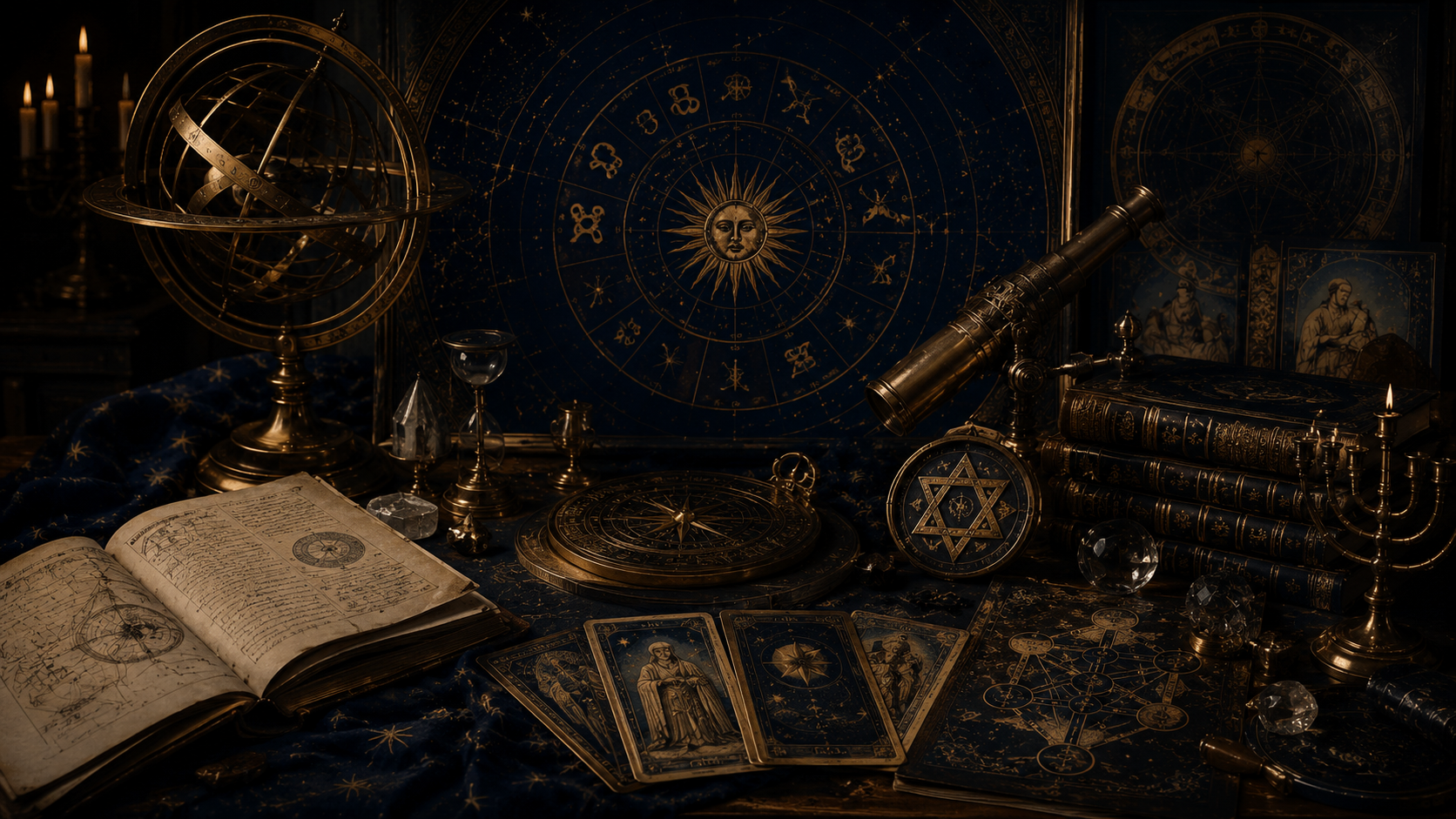
4 of 4
20th Century
Esoteric Modernism
Twentieth-century esoteric decks combined occult correspondences with experimental color, geometry, and modernist art. They treated Tarot as both a philosophical system and a field for deliberate visual invention.
Visual Signature
Layered geometry, symbolic color, celestial diagrams, and abstracted figures encode multiple correspondences within a single image.
Historical Influence
These experiments encouraged later artists to build decks around distinct spiritual, intellectual, and aesthetic systems.
1 of 4 — Early Italian Tarocchi
The People Behind the Symbols
Ideas and People Who Reshaped Tarot
Tarot’s later meanings emerged through argument, invention, publishing, performance, and art. Rather than portraits, this archive uses symbolic editorial marks while preserving the documented contributions of each person.
Contributor to Tarot’s Evolution
1725–1784
Antoine Court de Gébelin
Late eighteenth-century writer
Popularized speculative claims connecting Tarot to ancient Egyptian wisdom during the late eighteenth century. His claims are not accepted as evidence of Tarot’s origin, but strongly influenced later occult interpretations.
Historical influence
He helped establish the mythic framework through which later occultists reinterpreted Tarot, while also illustrating why documented history must be separated from influential speculation.
Contributor to Tarot’s Evolution
1738–1791
Jean-Baptiste Alliette, known as Etteilla
Cartomancy pioneer
Developed one of the earliest systematic methods for using Tarot in divination and published dedicated cartomantic meanings and practices.
Historical influence
Etteilla helped turn scattered cartomantic practices into a teachable system and made divinatory Tarot a distinct published tradition.
Contributor to Tarot’s Evolution
1810–1875
Éliphas Lévi
Nineteenth-century occult writer
Connected Tarot with nineteenth-century Western esotericism, ceremonial magic, and Kabbalistic symbolism, influencing later occult orders and writers.
Historical influence
His synthesis made Tarot central to nineteenth-century occult philosophy and provided a conceptual bridge to later ceremonial orders and deck designers.
Contributor to Tarot’s Evolution
1857–1942
Arthur Edward Waite
Tarot system writer
Developed an influential early-twentieth-century Tarot system emphasizing symbolic and initiatory interpretation.
Historical influence
Waite helped formulate one of the twentieth century’s most widely reproduced Tarot systems and commissioned a fully illustrated approach that reshaped modern reading.
Contributor to Tarot’s Evolution
1878–1951
Pamela Colman Smith
Illustrator and theatrical artist
Created the fully illustrated artwork that transformed modern Tarot reading, particularly through expressive narrative scenes on the minor cards.
Historical influence
Her pictorial storytelling made every card participate in a coherent visual narrative and decisively shaped how modern Tarot is learned, read, and redesigned.
Contributor to Tarot’s Evolution
1875–1947 · 1877–1962
Aleister Crowley and Lady Frieda Harris
Esoteric system and modernist art
Collaborated on an influential esoteric Tarot system combining ceremonial symbolism, astrology, color theory, and modernist art.
Historical influence
Together they demonstrated how a Tarot deck could become both a rigorous esoteric system and a major modernist art project.
Occult Revival and Esoteric Symbolism
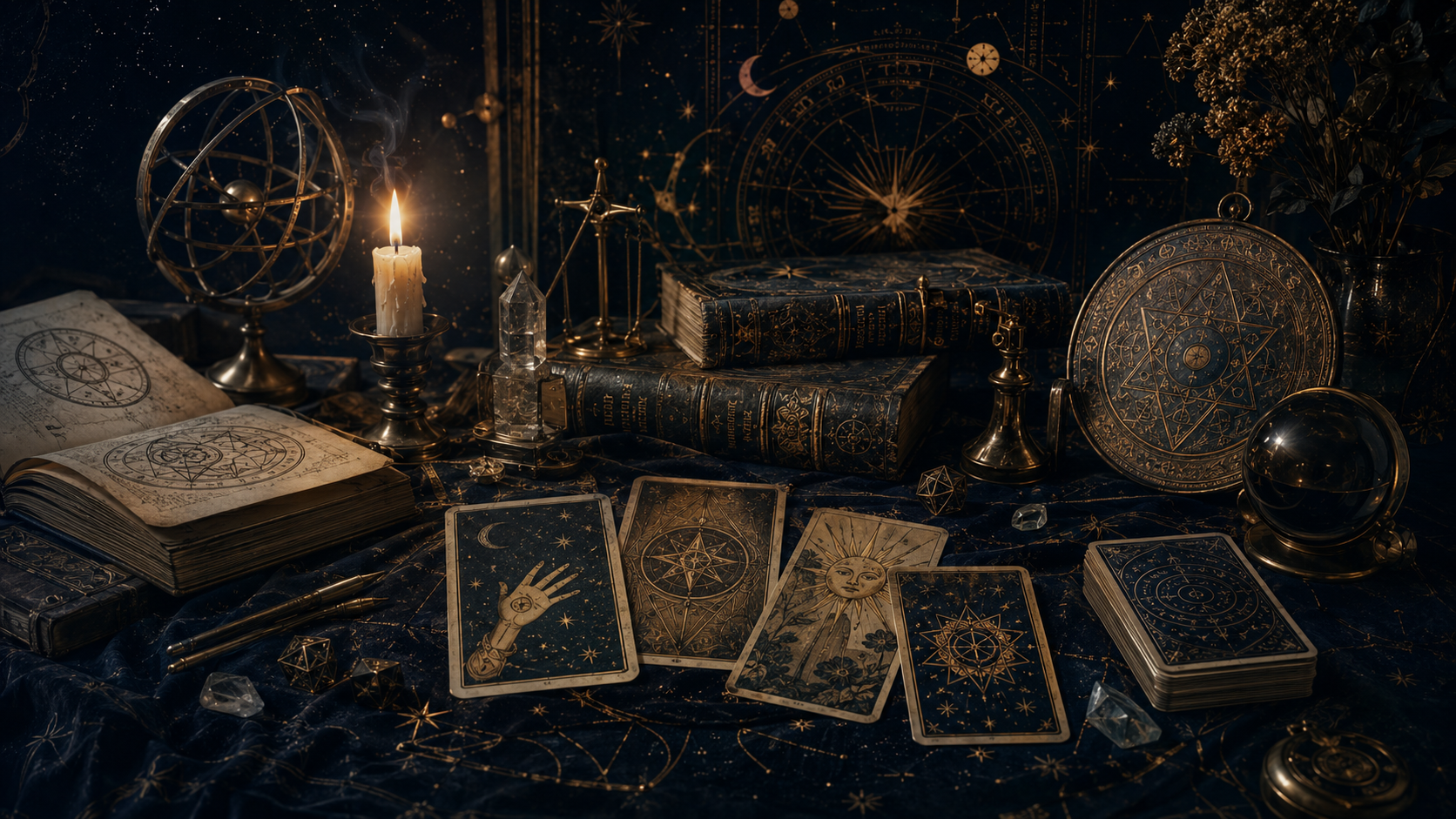
During the eighteenth and nineteenth centuries, writers and occultists reinterpreted Tarot through Hermeticism, astrology, Kabbalistic correspondences, ceremonial magic, numerology, and broader esoteric philosophy.
These frameworks created complex systems of association between cards, letters, planets, elements, paths, colors, and ritual ideas. They became deeply influential in later deck design and remain meaningful within many contemporary esoteric traditions.
Historical clarificationThe occult revival added influential symbolic systems to Tarot, but those later associations should not be confused with the documented origin of Tarot as a European card game.
- Hermeticism
- Astrology
- Kabbalistic correspondences
- Ceremonial symbolism
The Rise of Illustrated Modern Tarot
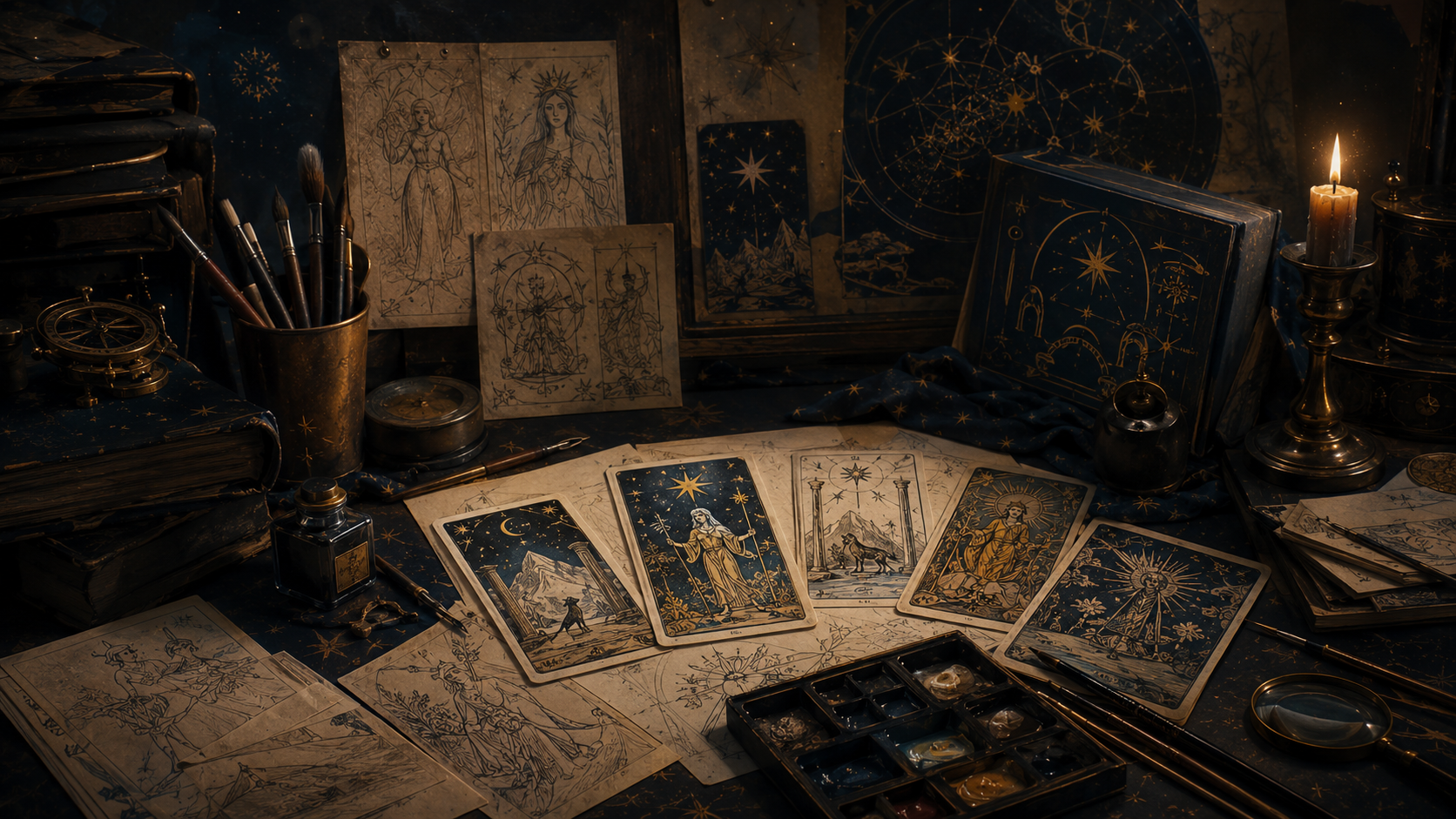
Many earlier pip cards emphasized repeated suit symbols rather than fully staged narrative scenes. In the early twentieth century, fully illustrated minor cards made the deck’s situations, gestures, moods, and relationships more visually immediate.
Artists became central contributors to Tarot’s symbolic language. Pamela Colman Smith’s complete illustrated sequence demonstrated how every card could participate in a coherent visual story, while later artists continued to reinterpret that possibility through distinct cultural, spiritual, and artistic lenses.
Pamela Colman Smith’s artistic contribution was foundational to the modern experience of reading a fully illustrated Tarot deck.
Tarot Today
Tarot today exists across many overlapping worlds. It remains a card game in some traditions, a divinatory practice in others, and a creative, spiritual, psychological, artistic, or reflective tool for many contemporary users.
- Reflective practice
- Spiritual practice
- Art and storytelling
- Games and historical study
- Journaling
- Digital communities
- Personal creativity
- Education and publishing
Sources and Further Reading
Explore museum collections, curatorial essays, exhibition material, and historical catalogues for deeper study beyond this overview.
V&AA History of Tarot CardsCuratorial article The Metropolitan Museum of ArtBefore Fortune-Telling: The History and Structure of TarotMuseum essay The Metropolitan Museum of ArtThe World in Play: Luxury Cards, 1430–1540Exhibition catalogue The Morgan Library & MuseumVisconti-Sforza Tarot CardsCollection record The Morgan Library & MuseumTarot! Renaissance Symbols, Modern VisionsExhibition resource
Chapter 09
Questions About the History of Tarot
Clear answers to common questions about Tarot’s origins, evolution, historical myths, and modern development.
The Chronicle Continues
Continue Your Journey
Tarot’s history is still being written through every artist, reader, scholar, collector, storyteller, and question carried into the cards.
Ideas and People